Top 3 Easter crafts for classrooms with minimal prep
Are you looking for a way to bring a creative spring celebration into your room without spending hours on preparation or a lot of money on supplies? You’re in the right place.
We’ve selected the top three projects just for busy teachers. These activities are designed to be meaningful and engaging for young learners. Best of all, they keep setup time to an absolute minimum.
Each idea uses everyday materials you probably already have on hand. This makes them budget-friendly and incredibly accessible. You won’t need a special shopping trip.
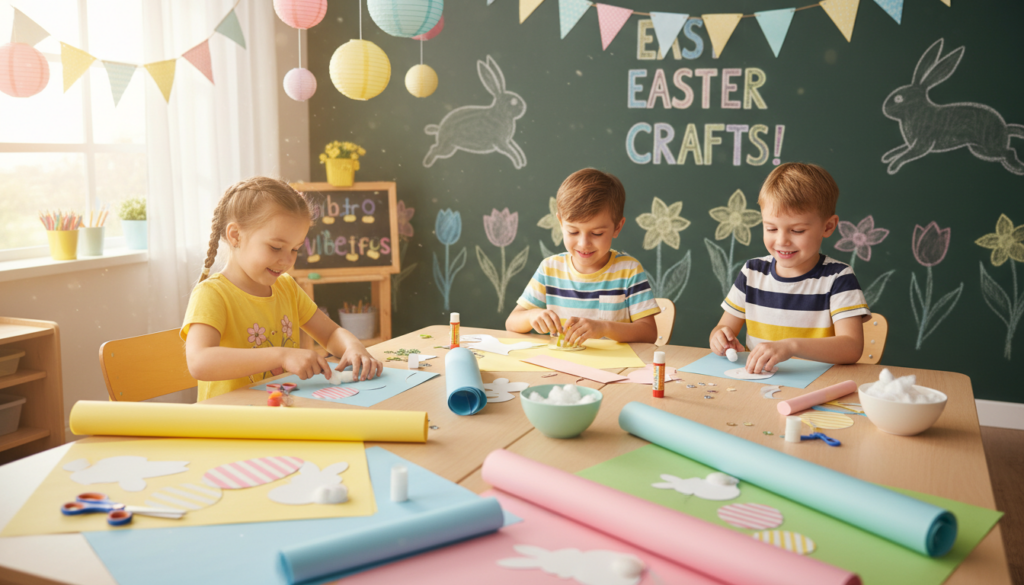
These creative tasks help build essential skills like fine motor development and creativity. They are flexible enough to work for different age groups and skill levels. Every student can join in and feel successful.
By the end of this guide, you’ll have three go-to ideas you can use year after year. They are perfect for celebration days or afternoon project time. You can create lasting memories without the stress.
Key Takeaways
- Focus on activities that require minimal preparation time from you.
- Each project uses common, easy-to-find materials.
- Students develop important skills while having festive fun.
- The crafts are adaptable for all ages and abilities.
- Create joyful and memorable classroom experiences.
- Build a collection of reliable projects you can reuse annually.
Introduction to Easter Crafts for Classrooms
Welcoming the renewal of spring can be seamlessly integrated into your daily schedule with simple artistic projects. These activities celebrate new life and create lasting memories with your students. You likely have most supplies already on hand.
Setting the Stage for a Creative Classroom
A vibrant, engaging atmosphere emerges when you choose hands-on tasks that spark imagination. Every learner can participate, regardless of their prior art experience. This inclusivity builds a positive environment where all feel successful.
| Aspect | High-Prep Project | Low-Prep Project |
|---|---|---|
| Teacher Time | Hours of setup | Minutes of setup |
| Student Success | Variable, can frustrate | High, builds confidence |
| Material Cost | Often requires special items | Uses everyday supplies |
| Classroom Flexibility | Rigid, hard to adapt | Spontaneous, responsive |
Benefits of Easy, Minimal Prep Projects
The advantages extend beyond saved minutes. You reduce your stress and can focus on guiding your kids. This approach lets you be more attuned to their interests.
Your little ones gain opportunities to shine. They develop fine motor skills and creative thinking. You get more time to offer individual support and enjoy their artistic journeys.
Why Minimal Prep Easter Crafts Are Ideal
Imagine diving into festive projects without the burden of complex preparations or specialized shopping trips. You can pull together engaging activities for kids using items already in your supply closet.
The beauty of these inexpensive DIY projects is that creativity doesn’t require a big budget. Simple materials like paper, glue, and scissors can yield impressive results.
Simplifying Setup with Everyday Materials
When you choose tasks that rely on household staples, you teach your little ones resourcefulness. They learn creative problem-solving with what’s available.
| Material Category | Typical Cost | Student Accessibility |
|---|---|---|
| Specialty Craft Kits | High | Low |
| Basic Art Supplies | Low | High |
| Recycled Household Items | Free | Very High |
| Classroom Staples | Minimal | High |
Minimal prep craft ideas let you say “yes” to spontaneous opportunities. All your children can participate fully, without missing specialized tools. This approach ensures every student feels included.
These easy projects eliminate barriers. You can incorporate more hands-on creative time into your classroom routine.
Easy DIY Easter Egg Crafts for Classrooms
Unleash creativity and scientific curiosity by guiding your students through the fascinating process of blowing and decorating real eggs. These hands-on activities merge simple art with basic science principles.
Your children will be thrilled to participate in projects that feel both traditional and excitingly new.
Blow and Paint Egg Projects
This classic technique begins by carefully making small holes in a raw egg. Students can then blow through one end to empty the shell.
You save valuable class time by preparing these hollow shells ahead of your session. Your young artists then focus entirely on the creative painting and decorating phase.
They learn about air pressure while expressing their unique style on a delicate canvas.
Recycled Egg Carton Creations
Empty cartons transform into adorable characters with just a bit of paint and felt. This project teaches a wonderful lesson in sustainability and creative reuse.
Each individual cup becomes a personal canvas for a chick, bunny, or other spring figure. Basic supplies like glue and paper scraps are all you need.
You can easily adjust the complexity for different age groups. Younger kids might simply paint, while older students add detailed assembly.
Creative Paper and Recycled Material Projects
Your students can discover the magic of turning simple paper strips and cardboard tubes into delightful seasonal creations. These activities build fine motor control and teach valuable lessons in sustainability.
They allow your little ones to get creative with minimal cost. You likely have all the supplies ready.
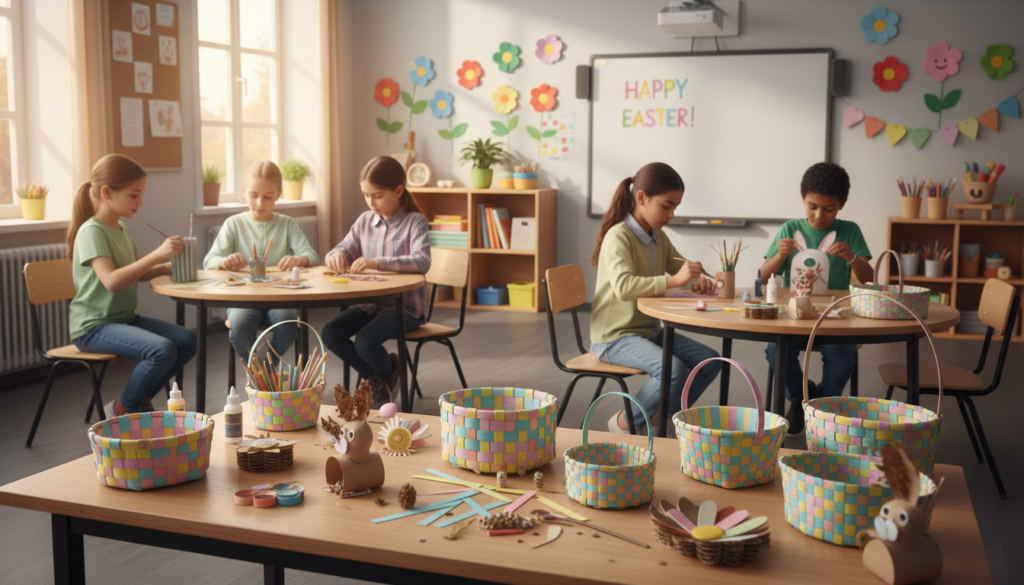
Paper Weaving and Origami Egg Cups
Paper weaving is a fantastic fine motor skills activity. It introduces young learners to pattern making.
This childhood classic teaches patience and planning. Free templates for woven egg chick cards come in two sizes.
Larger versions suit small hands. Card-sized options work for older kids.
Recycled Tissue and Toilet Roll Crafts
Transform materials you’d normally discard. Make tissue paper hen baskets with homemade paste.
You only need flour and water—no PVA glue. Toilet paper roll bunnies are incredibly accessible.
They require colored paper, googly eyes, a tube, and glue.
Unique Pop Up Chick Cards
Your students will adore these happy, cheerful cards. They are surprisingly easy to make.
The design is based on simple circles. Kids can make their chicks any size.
These make wonderful spring decor or gifts to mail home.
| Project Type | Primary Skill Developed | Key Materials | Prep Level |
|---|---|---|---|
| Paper Weaving | Fine Motor & Pattern Recognition | Paper strips, template | Low |
| Recycled Tissue Crafts | 3D Construction & Texture | Tissue paper, flour, balloon | Medium |
| Pop Up Chick Cards | Spatial Reasoning & Design | Cardstock, circles, glue | Very Low |
These paper-based ideas are perfect for busy learning spaces. They create minimal mess and dry quickly.
Finished projects can be easily sent home at the end of the day. Everyone gets to share their success.
Mess-Free Crafts Perfect for Younger Students
Focus on artistic projects that spark joy without the worry of spills or stains taking over your room. These activities are designed for preschool and early elementary kids.
Your little ones experience creative success without overwhelming cleanup. This keeps your classroom calm and organized.
Simple Glue and Paper Projects
These tasks center on basic skills like gluing, placing, and assembling. You can pre-cut templates and shapes for your youngest learners.
Then, let them get creative with safe decorations. Child-friendly glitter and sequins add sparkle without major mess.
Paper plate crafts work wonderfully. The sturdy base is easy for small hands to hold.
Your children can simply glue or draw items onto the plate. They create cheerful spring characters with minimal fuss.
These easy Easter crafts for kids build confidence. Even inexperienced crafters produce something they’re proud of.
You eliminate concerns about paint spills or marker stains. Cleanup is quick when you primarily use paper and glue.
Adapt the projects for various skill levels. Do more pre-work for the youngest students.
Let older children handle more preparation themselves. Everyone enjoys a successful, tidy creative session.
Crafts to Enhance Fine Motor Skills
You can turn simple creative time into a powerful opportunity for developing essential physical skills. Purposeful project choices strengthen small hand muscles and coordination.
Cutting, Weaving, and Painting Activities
Paper weaving provides an excellent workout for fine motor skills. Kids carefully cut strips and thread them through slits. This builds precision and control.
Painting tasks naturally enhance fine motor development. Gripping brushes and making deliberate strokes improves hand-eye coordination. Cutting activities give essential practice with scissor control.
Finger Knitting and Pinch Pot Projects
Finger knitting is a wonderful skill to introduce. It builds finger dexterity and teaches a mindful, repetitive technique. Children can create yarn chicks or bunnies.
Pinch pot projects using air-drying clay are super fun. They develop exceptional finger strength as kids pinch and shape the clay. These activities work for all ages.
When you incorporate these tasks, you help little hands develop the strength needed for writing and daily tasks.
Easter crafts for classrooms: Engaging and Inclusive Projects
The magic of springtime celebrations comes alive when your projects feature universally loved characters like bunnies and chicks. You can create a mix that suits primary school children and elementary students alike.
These activities connect to personal interests and different skill sets. Everyone finds a way to participate and shine.
Projects for Mixed Age Groups
The best DIY Easter activities are easily adapted. You can use the same basic project with students at different levels.
Provide templates and pre-cut materials for younger kids ages. Challenge older children to design their own patterns.
This inclusive approach ensures every child creates something they’re proud to display. It is perfect for multi-grade learning spaces.
Incorporating Fun Themes like Bunnies and Chicks
Children adore the Easter bunny and cheerful chicks. These icons are naturally engaging and connect to holiday stories.
When you add bunny ears or a chick beak to a project, you give a clear creative goal. Students still have room for personal expression.
You can make Easter egg decorations or pop-up chick cards. These craft ideas become eye-catching ornaments for your room.
| Age Group | Adaptation Strategy | Key Materials | Project Outcome |
|---|---|---|---|
| Preschool | Pre-cut shapes, simple gluing | Paper plates, glue, markers | Basic bunny face |
| Early Elementary | Template tracing, added details | Construction paper, scissors, googly eyes | Standing bunny character |
| Upper Elementary | Original design, 3D construction | Cardboard tubes, paint, fabric scraps | Complex chick diorama |
These projects work beautifully as table activities during parties. They keep kids productively engaged while you manage the event.
Your space transforms into a festive gallery celebrating each student’s unique work.
Adapting Crafts for Different Age Groups
A single craft idea can become a perfect fit for your entire class when you know how to scale its complexity. This approach saves you planning time and ensures every child is appropriately challenged.
Tailoring Complexity for Preschool to Elementary
For your youngest children, simplify the process. You can pre-cut shapes and handle tricky steps. Your little ones then focus on the fun parts like gluing and decorating.
Elementary students thrive with more independence. Let them do their own cutting and assembly. Encourage them to plan unique designs and color schemes.
This is not about dumbing down a project. It’s about scaffolding the experience for success. A younger child might just complete the weaving on a card.
An older student would trace the template and assemble the whole piece. Your elementary class will love the creative control. They feel proud making their own unique characters.
When you know your kids, you can set up one activity with different entry points. This efficient strategy works for mixed-age groups. Every student engages at their perfect level.
Tips on Sourcing Materials and Time-saving Prep Techniques
Smart material sourcing is the secret to keeping your spring projects simple, affordable, and stress-free. You can focus on the fun part—guiding your kids—instead of scrambling for supplies.
This approach saves you both money and valuable prep minutes. Your existing art stash is likely a treasure trove of perfect items.
Using Everyday Household Items
Look first in your own cupboard before buying anything new. Basic colored paper, glue, and scissors form the core of countless fantastic ideas.
Recycled goods like paper plates and cardboard tubes are fantastic. They transform into wonderful characters with just a little creativity.
Start a collection bin for clean recyclables a few weeks ahead. This teaches a great lesson in resourcefulness.
Your students learn to see potential in ordinary objects. This mindset is a powerful creative tool.
| Sourcing Strategy | Average Cost | Teacher Prep Time | Student Success Rate |
|---|---|---|---|
| Specialty Craft Store | High | High (Shopping Trip) | Medium |
| Classroom Basics & Recyclables | Very Low | Low (Organization) | High |
| Pre-assembled Kits | Highest | Lowest | Variable |
Preparing Materials for Efficient Setup
Organization is your best friend for a smooth session. Pre-cut complex shapes for younger children the day before.
Set up individual supply bags or organized stations around the room. This prevents traffic jams and confusion.
Create a simple finished sample for your students to see. A visual goal clarifies the steps and sparks excitement.
Consider a dedicated box for seasonal decor projects. Restock it each year with staples like pastel paper and googly eyes.
You’ll always be ready for spontaneous creative time. These small steps add up to huge time savings and less stress.
Conclusion
With these simple ideas in hand, you can transform ordinary materials into extraordinary springtime memories. You have a fantastic trio of minimal-prep projects to choose from: classic egg decorating, inventive paper and recycled material DIY, and tidy, glue-based activities.
The best part is seeing your little ones get creative and build skills. These adaptable ideas work for various ages and skill levels. Whether making a cheerful bunny or pop-up Easter cards, the focus is on joyful, hands-on learning.
So, gather your basic supplies and dive in. You’re all set to create a special and creative spring celebration that your students will cherish.
FAQ
What are the best materials to use for quick, minimal prep projects?
You can create fantastic projects using everyday items you likely already have. Think paper plates, construction paper, cotton balls, and empty egg cartons. Basic supplies like child-safe Elmer’s glue, Crayola washable paint, and markers are perfect. This approach simplifies your setup and keeps the focus on creativity.
How can I adapt these activities for different age groups in my room?
Tailoring the complexity is key. For your youngest learners, focus on simple gluing and tearing tasks. For elementary-aged children, introduce more steps like paper weaving or basic cutting. You can easily modify most ideas by pre-cutting shapes for little hands or letting older kids do all the assembly themselves.
Are there any mess-free options suitable for younger students?
Absolutely! Many fantastic ideas require minimal cleanup. Projects centered on paper construction, like making bunny ears from headbands or creating simple pop-up cards, are excellent. Using stickers, pre-cut pieces, and markers instead of liquid paint can also keep things tidy while still being fun.
Which projects help develop fine motor skills?
Several activities are great for building those important motor skills. Paper weaving for a basket, carefully decorating blown eggs, or using small pieces of tissue for mosaic art all require precise hand movements. Even the simple act of peeling and sticking stickers helps strengthen little fingers.
Where can I find unique DIY ideas beyond the classic decorated egg?
Get creative with recycled materials! Turn toilet paper rolls into adorable chicks or bunnies. Use an egg carton to make a spring bouquet or a cute caterpillar. Searching for “diy easter” projects using paper plates or coffee filters can also lead to a treasure trove of unique and easy craft ideas.
Recent blog posts

Minimalist Summer Decor: 7 Easy Ways to Lighten Up Your Space
Easy Driftwood Wall Hanging DIY for a Coastal Living Room
Simple Summer Mantle Decor Ideas That Take Less Than 5 Minutes

Step-by-Step No-Sew Linen Throw Pillows for Summer 2026
Top 3 Cozy Summer Porch Decor Ideas for Small Spaces