7 quick no-mess summer craft ideas for toddlers
Ready for a low-stress way to keep your kids busy without a big clean-up? This short list pulls easy picks from Fitness by the Sea, How Wee Learn, and SplashLearn so you can set up fast and enjoy more playtime.
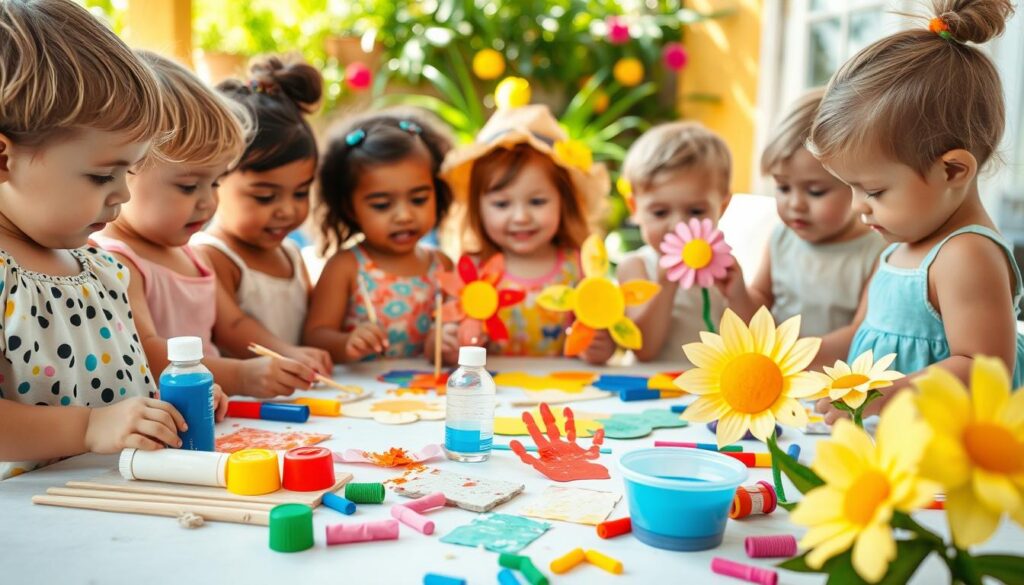
You’ll find seven fast projects that use items like contact paper, stickers, tape, and pre-cut shapes. Think Magic Nuudles (kids age 3+, about an hour with just a damp paper towel) and premade suncatchers that take twenty minutes.
Each entry notes simple materials, a brief step flow, and quick tips to keep surfaces spotless. You can do these indoors or outside, and many double as small skill builders to boost fine motor work and early language.
Use this list as a go-to for ten-minute moments or to plan a week of low-mess play that fits your routine and keeps things fun.
Key Takeaways
- Seven no-mess picks you can set up in minutes.
- Low supplies: stickers, tape, contact paper, pre-cut paper shapes.
- Mix of display-worthy makes and open-ended play like Magic Nuudles.
- Indoor or outdoor options with fast clean-up cues.
- Each project supports fine motor skills and simple language play.
Why quick, no-mess crafts kept your summer days smooth and fun
When time was tight, simple no-mess activities became your go-to way to reset the day. These projects were small but mighty: easy to set up, cheap to stock, and gentle on floors and furniture.
You saved the day more than once by pulling out a tidy task that matched kids’ short attention spans and big curiosity. Process-first play emphasized the experience, not perfection, so children felt proud even when a piece looked messy.
The benefits stacked up fast:
- Quick setup and fast cleanup meant more play, less scrubbing.
- Simple supplies like paper shapes and stickers fit in small time windows.
- Predictable art moments helped transitions and kept moods steady.
“Process art gives toddlers room to explore and build confidence.”
In short, a single, tiny project often reset energy, taught basic skills like color names and sequencing, and kept your home calm when outdoor plans changed.
Set up your no-mess crafting zone at home
A tidy, ready-to-go station makes it easy to say yes to quick projects any time. Keep the area small and routine so you and your kids can begin with minimal prep and less stress. Fitness by the Sea shows that laying materials on a flat surface before play cuts mess and distraction.
Smart surfaces: trays, table covers, and outdoor spots
Dedicate a wipeable surface—use a tray, a plastic table cover, or take the project outside on a calm summer day. Tape paper to the tray so wind won’t send bits flying. A sheet of cardboard under play mats adds stability on grass or a patio table.
Contain-it tools: zip bags, muffin tins, and small cups
Keep a shallow bin stocked with construction paper, pre-cut shapes, stickers, tape, and a few small cups for quick grabs. Muffin tins work great to sort tiny pieces and limit spills.
- Use zip bags and lidded containers for crayons, glue sticks, and scraps of paper.
- Add a small “wet zone” with a damp cloth and a water cup on a tray to handle quick wipes.
- Pre-portion materials for each project so setup takes seconds and kids can help reset.
Make it a short habit: five minutes to set up and five minutes to reset means you’ll find more time to enjoy making together.
Essential no-mess supplies to have on hand
Keep a compact kit of simple items so setups take seconds and cleanup stays easy.
Start with basics that work again and again. Fitness by the Sea often lists glue sticks, stickers, and simple decorating items as must-haves. How Wee Learn highlights contact paper and stickers as perfect no-mess options.
Go-to basics you’ll reach for most
- Stock a small basket with contact paper sheets, glue sticks, stickers, washi tape, and a little container of googly eyes.
- Add heavyweight paper and construction paper so backgrounds and shapes are ready to use.
- Keep paint pens or washable paints for contained decorating—optional, but nice for one special project.
- Include kid-safe scissors, chunky crayons, and dot markers to vary the art without making a mess.
| Item | Why it helps | Tip |
|---|---|---|
| Contact paper | No drying time; peel-and-stick projects | Pre-cut backing to speed setup |
| Glue sticks | Less drip and faster bonding than liquid glue | One per child avoids sharing mess |
| Pre-cut shapes | Kids start creating immediately | Store in labeled zip bags |
“Contact paper projects are the ultimate no-mess win: peel, stick, and display with no drying time.”
Keep it light: these simple supplies are enough to make dozens of fast projects that save you time and keep kids happily making.
Rock magnets your toddler can make and display
Turn smooth rocks into tiny refrigerator friends with a few quick steps and a bit of glue. This hands-on project takes about an hour and suits age 3+ when you supervise the small parts.
Quick materials and setup
Gather: smooth river rocks, magnet backs, a strong child-safe glue, and a small jar of googly eyes. Optional acrylic paint adds flair. Lay a scrap of paper under each rock and use a tray for drying.
- Let kids pick a rock and, if painting, brush on a thin coat and set aside to dry.
- Help them press two googly eyes in place; these playful eyes make the piece instantly lovable.
- Glue the magnet to the back and let the whole piece cure fully before use.
“Pre-select larger rocks and supervise glues to keep the process safe and simple.”
Pro tip: Encourage silly expressions by placing eyes off-center and snap a photo of each maker with their magnet. This quick art project turns nature finds into a fridge-ready keepsake and gives your kids a proud, displayable result in little time.
Catch the sunshine: easy suncatchers without the mess
Make a little gallery of glowing shapes using premade suncatchers or a contact-paper collage. Both paths keep cleanup light and give your kids a bright display they can show off.
Two ways to make them
Premade suncatchers: Fitness by the Sea recommends these for age 3+ because they take about 20 minutes. Set out two or three paint colors, let each child paint, then hang to dry.
Contact-paper nature finds: Tape a sheet sticky-side up and let kids place leaves, petals, and small bits of nature. Seal with a second sheet and frame the piece with a ring cut from construction paper or a paper plate rim.
- Keep paints to two or three shades to shorten time.
- One tray holds all materials so you can move the activity to fresh air if you like.
- Display at child height and rotate new nature pieces weekly to renew the fun.
“This simple project blends a bit of sneaky science and art—kids notice shapes and colors while making something pretty.”
Paper plate sun that brightens any rainy day
A paper plate sun gives you a fast, cheerful project that takes almost no cleanup. You can prep in just a few minutes and hand the activity to your kids while you sip coffee or chat quietly nearby.
Keep it simple: use a yellow plate or pre-paint a paper plate to skip drying time. Set out pre-cut construction paper strips, a tray with a glue stick, and a few stickers for features.
Low-mess setup: pre-cut rays, glue sticks, and a big smile
Cut orange and yellow strips ahead of time so children glue rays around the rim in a bright burst. Encourage pattern play by alternating colors; it boosts focus and adds a playful rhythm.
Finish with easy eyes and a smile—stickers or a drawn face keeps cleanup fast. If you want extra gleam, dot cheeks with a paint pen. Add a loop of tape on the back and hang the sun right away.
- Pre-paint a plate or use yellow paper plates to save drying time.
- Keep a small tray with glue sticks and pre-cut pieces so assembly takes little time.
- Talk about the weather while you work to add simple language learning.
| Step | What to prep | Quick tip |
|---|---|---|
| Base | Yellow paper plate or pre-painted plate | Use yellow to avoid paint drying time |
| Rays | Construction paper strips in orange and yellow | Pre-cut and sort in a tray for fast access |
| Face | Stickers or drawn eyes and smile | Stickers keep it no-mess and adorable |
“A simple plate can turn into displayable art that boosts fine motor skills and brightens a room.”
Build-and-stick Magic Nuudles for open-ended play
A tray, a damp towel, and a handful of colorful Nuudles can buy you focused play without sticky cleanup.
Magic Nuudles suit age 3+ and take about an hour of calm, constructive time. Kids dab pieces on a slightly wet towel so the pieces cling together. No glue, no drying, and very little mess.
Set each child a placemat and a damp paper towel on a tray. Hand out Nuudles and let them stack, bend, or link to build animals, crowns, or simple shapes.
- A quick dab makes parts stick — you stay in charge of moisture with a small water bowl.
- Rotate color sets to spark fresh ideas and skill practice.
- Take photos of finished builds to create a mini “gallery,” then store bits in a zip bag or compost them.
| Step | Why it helps | Quick tip |
|---|---|---|
| Setup | Tray + damp towel keeps pieces contained | Use a placemat per child to limit stray bits |
| Play | No-glue building fuels creativity | Suggest themes if kids need a spark |
| Wrap-up | Fast reset and reuse next time | Sweep leftovers into a zip bag in two minutes |
“A quick dab is all it takes to make pieces stick—no glue, no waiting, no mess.”
Simple pasta necklaces with zero paint cleanup
Threading big-holed shapes helps little ones practice focus and fine motor control in minutes. This easy project gives you a wearable result with almost no mess and no drying time.
Try this twist: pre-dyed pasta or colorful straws
Prep ahead by dyeing pasta in jars or cutting colorful straw segments so kids can dive straight into stringing. Tape one end of a yarn length to make a simple “needle” that tiny hands can use easily.
- Offer big-holed pasta shapes to build confidence and quick success.
- Use pattern prompts—two red, one blue—to boost early math and focusing skills.
- Make name necklaces by adding a letter bead or a small paper tag at the center.
- Keep choices visible in a muffin tin and celebrate finishes with a mirror moment.
- Store extras in a labeled jar so setup takes under one minute next time.
“Skip paint and keep the activity ready-to-wear—simple, fast, and satisfying.”
Sponge sailboats for backyard water play
A simple sponge, a wooden skewer, and a triangle of sturdy paper make an easy, low-mess sailboat that sparks quick outdoor fun. Fitness by the Sea lists this as an age 3+ activity that takes about 20 minutes and works well in a basin, kiddie pool, or sink.
Make two small holes in a paper triangle, slide the sail onto a skewer, and press the skewer into the sponge’s center. Dull or cap the skewer tip to keep things safe and let each child launch a boat in a shallow bin of water.
- Cut a triangle sail from sturdy paper; poke two holes and thread the skewer through.
- Press the skewer into the sponge center; trim or cap sharp tips for safety (age 3+).
- Float boats in a tub, kiddie pool, or sink to create easy backyard water play.
Quick extras: add a cardboard flag topper, use a paper pennant, or hold a breath-powered race lane to show how air pushes sails. Limit pieces to one boat per child to speed cleanup and keep towels handy for a fast reset.
| Step | What to use | Quick tip |
|---|---|---|
| Build | Sponge, skewer, paper sail | Pre-cut sails to save setup time |
| Safety | Blunt skewer tip, small bin of water | Supervise launches and cap tips |
| Play | Kiddie pool or basin | Try different sponge shapes to compare glide |
“A tiny sail shows children how air and water work together—and it only takes minutes.”
This fast craft becomes a repeatable outdoor activity you can run any sunny day. When you’re done, rinse the bin, squeeze out sponges, and stash pieces until next time.
Seashell painting that stays tidy
Seashell painting can be a neat, hands-on activity that gives you a keepsake without a big cleanup. Use a wipeable tray and a few paint pens or a tiny palette of washable color to keep everything contained.
Contain the color:
Paint pens and wipeable trays
Set shells on a tray and offer paint pens or a small set of washable paint. Kids love adding simple patterns — dots, stripes, and swirls — which use little paint and dry fast.
Swap loose glitter for glitter glue if you want sparkle. That keeps sparkle from scattering and makes clean-up quick. Keep one water cup and a cloth per tray so little spills are easy to wipe away.
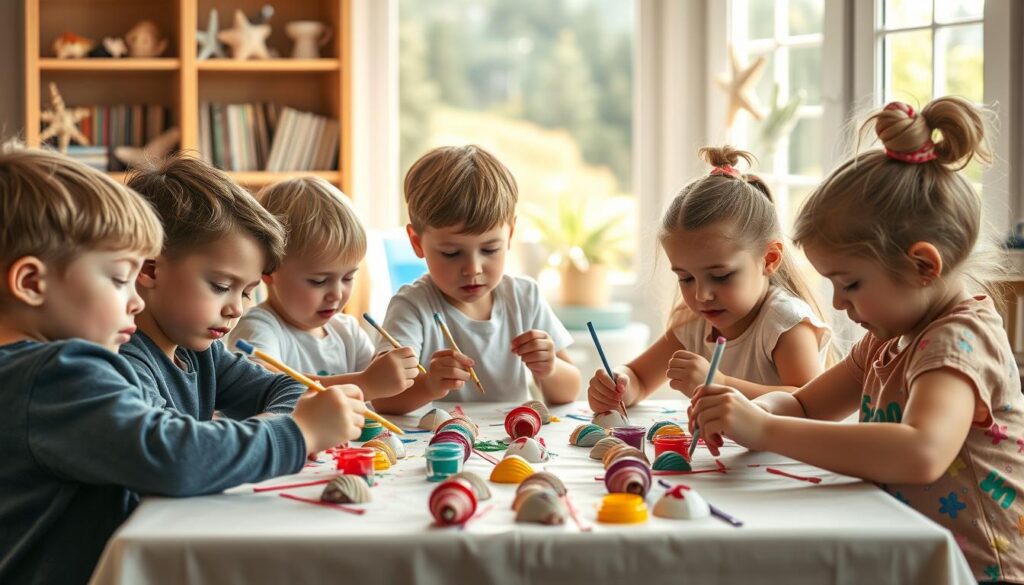
- Dry shells on paper, then glue a few to a strip of construction paper to make a small “shell gallery.”
- Try a matching set of three shells with coordinating colors as a gift idea.
- Add sticker eyes to a couple of shells to turn them into friendly nature critters.
- Talk about where shells come from to add a simple nature lesson.
“This quick art project becomes a beach memory and a sweet displayable keepsake.”
Wrap-up: wipe the trays, snap a photo of finished pieces, and pop shells on a windowsill to enjoy. In little time you get a tidy project that kids love and you can display with pride.
Process over product: skills your toddler builds while crafting
Small, repeatable art moments teach more than a finished piece—they build steady skills and sweet routines.
Every quick activity gives your child chances to practice grasping stickers, pressing glue sticks, and placing tiny paper shapes. These actions strengthen fine motor control and hand-eye coordination in small, measurable steps.
Fine motor, color exploration, and language growth
You’ll notice color exploration as kids pick, compare, and name hues. Narrate steps and invite them to say what they are doing.
This simple narration naturally grows language and sequencing: first peel, then place, then press.
Confidence and creativity through choice
Offer two or three options—pick a color, choose a shape—to spark problem solving and pride. Short, repeatable setups make crafting a calming play routine they expect and enjoy.
- Hands-on skills: sticker grasp, paste press, stringing, and folding.
- Thinking skills: color choices, patterns, and early sequencing.
- Emotional wins: pride in effort and display at child height.
| Skill area | What to watch for | Quick tip |
|---|---|---|
| Fine motor | Improved grip and placement accuracy | Use larger paper shapes to start, then shrink size |
| Language | New words for colors and actions | Model short phrases and ask open questions |
| Confidence | Willingness to try and choose | Display work at kid height and praise effort |
| Routine | Predictable calm during making | Keep materials accessible for independent play |
“The focus on experience helps children feel proud of effort rather than a perfect outcome.”
summer craft ideas for toddlers you can do in minutes
Grab a small tray and a handful of ready-to-use bits to make quick, displayable projects in minutes.
Seven fast picks that kids love and you can set up in almost no time:
- Rock magnets: let kids paint, add eyes, and glue a magnet back for instant fridge art.
- Suncatchers: use premade shapes to paint quickly or press nature finds onto contact paper for zero-dry-time magic.
- Paper plate sun: glue pre-cut rays and a big smile—fast décor that brightens a room.
- Magic Nuudles: dab to stick and let kids build freely—no tools, all imagination.
- Pasta necklaces: string pre-dyed pasta or straw beads for a wearable win in minutes.
- Sponge sailboats: build a simple boat, then head straight to a water bin for backyard play.
- Seashell art: decorate shells on a tray—clean, colorful, and ready to display.
These quick projects slot into short time blocks and keep your routine flowing on busy days. Keep construction paper shapes and a small supply caddy ready so you can let kids start fast. Mix two mini projects when energy is high and watch how much kids love choosing and making.
| Project | Prep | Why it works |
|---|---|---|
| Rock magnets | Rocks, paint, glue, magnet backs | Displayable and tactile success in one session |
| Contact-paper suncatchers | Contact paper, nature bits, frame ring | No drying time; hands-on nature play |
| Magic Nuudles | Tray, damp towel, Nuudles | No glue and reusable pieces |
| Pasta necklaces | Pre-dyed pasta, yarn | Fine motor practice; quick to finish |
“Keep a tiny kit and you turn spare minutes into proud little projects.”
Safety first: age tips, supervision, and substitutions
Start every project with a quick safety check that fits your child’s age and skill.
Keep things simple and clear. Match materials to an age-appropriate level and set one or two rules before you begin.
Swap-ins: non-toxic glue, blunt tools, and large pieces
Choose non-toxic, washable supplies to make crafting at home stress-free. Swap liquid glue for glue sticks or adhesive dots to avoid drips and speed the process.
Pre-cut paper shapes so younger kids can place and press without scissors. Offer larger pieces and blunt utensils for early learners.
Supervise small parts closely. Keep eyes, magnets, and tiny beads stored up high until you need them. Watch hands during any step with small parts and model gentle tool use—“tips down” and “dots of glue.”
- Match each project to your child’s age; add smaller parts only when you know they can handle them.
- Use trays to define workspaces and keep pieces from rolling away.
- Practice a quick “clean hands” check before snacks or transitions.
| Swap-in | Why it helps | Quick tip |
|---|---|---|
| Glue sticks / adhesive dots | Less mess; no drips or waiting to dry | Keep one per child to avoid sharing spills |
| Pre-cut paper shapes | Reduces scissor time and slips | Sort by color in small cups for easy access |
| Blunt tools & capped skewers | Lower risk when building or inserting parts | Only bring out sharp items under close supervision |
| Large beads instead of tiny ones | Makes stringing safer and faster | Use pattern prompts to boost focus |
“When in doubt, simplify the way you do the craft: fewer pieces and clearer steps make everything safer.”
Cleanup hacks that make crafting a daily habit
A tiny cleanup habit turns messy activities into a repeatable part of your day. Fitness by the Sea suggests working on a flat surface and letting pieces dry fully. How Wee Learn highlights that quick resets help you keep the routine alive across days.
Five-minute reset: wet wipes, bin sorting, drying rack
In just five focused minutes you can wipe trays, sort tools, and stash extras. Keep a small caddy of wet wipes and cloths so hands and surfaces are clean in seconds.
- Sort tools into labeled bins and return them right away so next-time setup is faster.
- Use a slim drying rack or a dry tray for items that need a few minutes to set.
- Line surfaces with paper for instant lift-and-toss cleanup when you’re done.
- Cap glues and pens before you start clearing to avoid surprises later.
| Action | Why it helps | Quick tip |
|---|---|---|
| Wipe & dry | Removes spills and stops paint or glue from spreading | Keep one water cup to rinse a cloth; one cup, zero clutter |
| Sort & stash | Makes next setup faster and keeps your home tidy | Park the supply caddy in one spot you always use |
| Two-minute game | Gets kids involved and builds the reset habit | Set a timer and celebrate the win with a high-five |
Small rituals add up: keep a “maybe later” zip bag for leftover bits and finish with a quick floor sweep. This simple way keeps crafts pleasant and makes painting, glue work, and other activity feel doable every day.
“Adopting trays, quick wipes, and pre-sorted bins significantly reduces cleanup and keeps crafting a daily habit.”
Conclusion
Keep this short list handy so you can pull a no-mess project in minutes and reset the day with calm play.
You now have a ready list of fast, low-mess summer craft picks that fit real life with kids. Stock paper basics, glue sticks, and simple shapes so setup takes seconds.
Rotate favorites or pair one quick make with a short play moment to match your time and energy. The focus stays on the experience—process-first activities help children build skill and confidence.
Choose one project, add a nature twist or playful eyes, snap a photo, and tuck it into your memory book. The simplest, repeatable projects bring the most smiles.
FAQ
What are no-mess craft options that take minutes to set up?
Choose activities that use stickers, pre-cut paper, contact paper, or glue sticks. Quick picks include rock magnets, paper plate suns with pre-cut rays, premade suncatchers, and pasta necklaces made with pre-dyed pasta or large straws. These keep setup and cleanup very short so you can craft and play in minutes.
How do I set up a low-mess crafting zone at home?
Use trays, vinyl table covers, or a washable mat outdoors to contain materials. Keep small supplies in muffin tins, cups, or zip bags. Place a damp cloth and a small bin nearby for trash and quick wipes.
Which supplies should I stock for easy, tidy projects?
Keep stickers, googly eyes, washi tape, contact paper, washable glue sticks, blunt scissors, and paint pens on hand. These items allow creative play without liquids and heavy cleanup.
How can I make rock magnets without sticky fingers everywhere?
Use strong craft glue or a hot-glue gun handled by an adult to attach googly eyes and magnet backs to smooth river rocks. Do the gluing on a tray and let pieces dry overnight on wax paper to avoid drips.
What’s a tidy way to make suncatchers with nature finds?
Use clear contact paper on a tray and press leaves or petals onto the sticky side, then seal with another contact sheet. Trim with blunt scissors. No paint or wet glue means minimal mess and easy display on windows.
How do I keep paint-related crafts clean for little hands?
Swap liquid paints for paint pens, washable markers, or sticker accents. If you do use paint, limit it to finger-paint trays or sponge stamps on a plastic plate and supervise closely; have wet wipes ready for fast cleanup.
Are pasta necklaces safe and easy for young children?
Yes if you use large-holed pasta or pre-dyed shapes and thread them on sturdy yarn with large plastic needles or straws. Always supervise to prevent choking and choose pasta sizes appropriate to your child’s age.
What skills do these quick projects help my child develop?
They build fine motor control, color and shape recognition, language as you describe materials, and confidence through choice. Open-ended play with Magic Nuudles or stickers supports creativity and problem-solving.
How can I make crafts safer for toddlers?
Use non-toxic glue, blunt scissors, and large components that aren’t choking hazards. Keep small parts like tiny googly eyes supervised or glued ahead of time, and always watch children during activities.
What are fast cleanup hacks to keep crafting a daily habit?
Do a five-minute reset: gather loose pieces into a bin, wipe surfaces with a wet cloth, shake trays outside, and dry items on a rack. Store supplies in labeled bins so you can set up again in seconds.
Can I take these projects outside to reduce mess indoors?
Absolutely. Outdoor spots on a picnic table or a washable mat work great. Sunlight helps dry glued items faster and gives more room for water play with sponge sailboats or drying racks for painted shells.
Recent blog posts
How to Transition Your Home Into Summer Mode Effortlessly
How to Refresh Dark Rooms for Spring Without Painting
10 Best Spring Home Ideas for Small Spaces That Need More Light

How to Add Soft Handmade Details to Your Home This Spring

Decorating with Nature: 7 Simple Ways to Bring Spring Inside